Acquisition and asset management of town-centre shopping centre
Sector
›
Operations
Deal type
›
Asset management
Location
›
Hemel Hempstead
In this record
Origin
Sourced off-market.
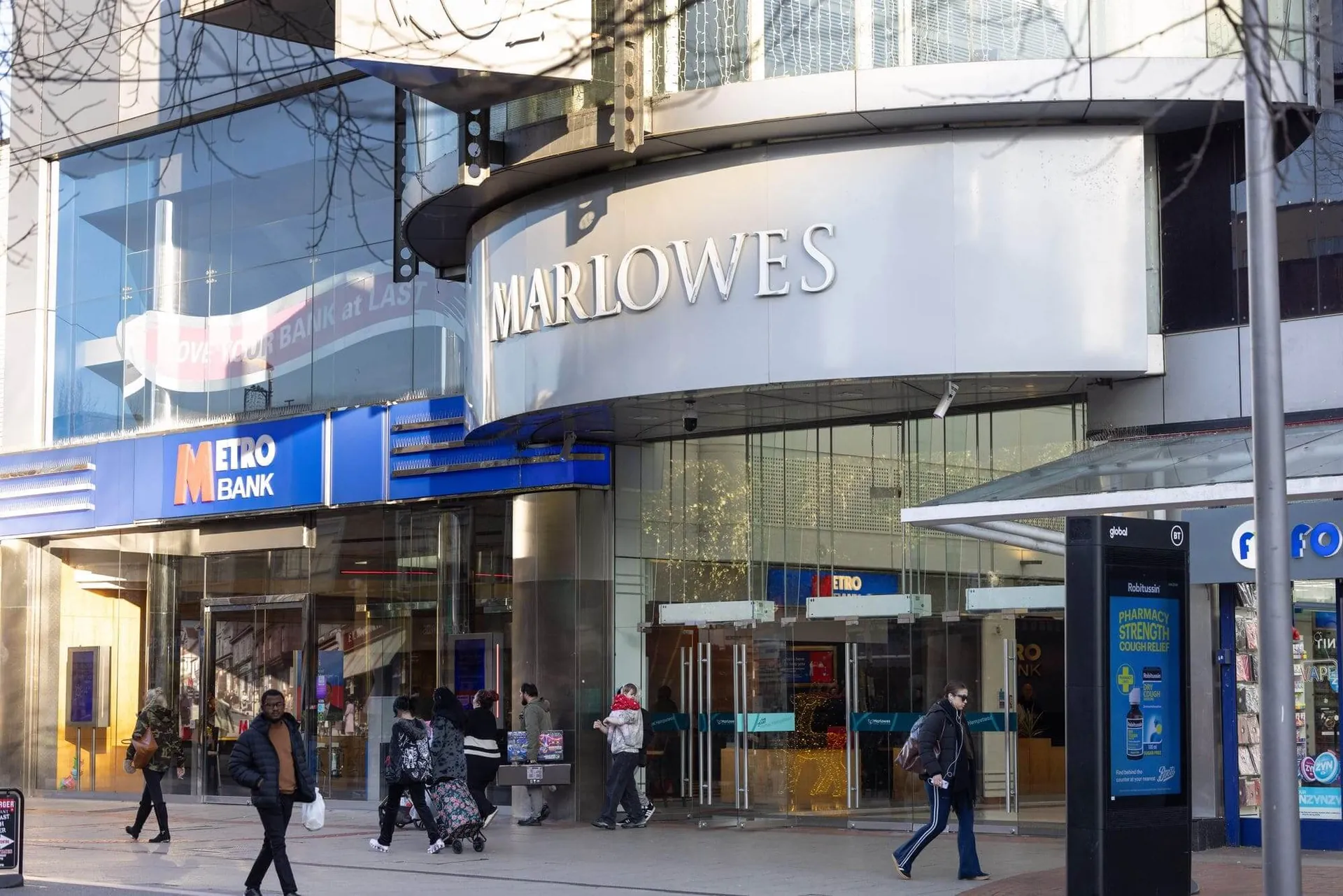
Rigorous due diligence and an integrated asset and property management approach underpinned Maritime’s acquisition of The Marlowes, a major town centre shopping destination in Hemel Hempstead.
The opportunity came to Maritime in early 2025 as an off-market purchase. The Marlowes comprises more than 80 retail units, with a 1,200-space multi-storey car park and a large high street frontage.
Maritime agreed a purchase price equating to approximately £22 per square foot. The same asset had been valued at c£55 million in 2014. Our assessment was that the centre remained strategically important to the town, but pricing reflected operational underperformance and a lack of focused, hands-on property management. Unfortunately an asset that had fallen through the cracks due to multiple ownerships.
From the outset, Maritime analysed The Marlowes as three separate components: the high street frontage shops, the enclosed shopping centre, and the multi-storey car park and gym. This methodology proved critical. Desktop valuations of the individual parts indicated that, split up, the car park and high street were worth double the acquisition price. In practical terms, much of the purchase price was supported by identifiable value from day one, allowing Maritime to concentrate on improving performance within the enclosed centre which was loss-making.
At acquisition, the enclosed shopping centre generated roughly £1.6 million of gross rent but was around £200,000 loss-making at the net operating income (NOI) level. For modern shopping centres, NOI, not headline rent, drives value.
That means the day-to-day mechanics, service charge control, procurement and energy, matter as much as leasing.
This is where Maritime’s model is differentiated.
Asset management and property management sit together under one roof, so leasing strategy, tenant relationships and cost decisions are made with the same investment objective in mind.
On many assets, those functions are split between separate firms. The result is slow decision-making, duplicated work and avoidable cost leakage. The Marlowes was exactly the kind of asset where tight operational control would translate into value.
That joined-up approach paid dividends during due diligence. Maritime’s review of the centre’s service contracts surfaced an issue within the incumbent security and cleaning arrangements. Termination language appeared to imply a payment equivalent to several years’ fees.
Maritime’s property management team reviewed the contract line by line and identified a variation mechanism that had been overlooked. While termination was constrained, services could be adjusted up or down, and pricing recalibrated accordingly. This analysis changed the risk profile and allowed us to take on the contract but for a price, making the shopping centre profitable in year one by enabling Maritime to implement the cost base that had been modelled from the outset.
A typical acquisition involves reviewing 20 to 30 service contracts alongside leases, building reports and the planning position. The investment case only stands up if the operational fundamentals are understood and controlled.
The asset was producing around £850,000 per annum at completion, representing a 12% initial yield on the purchase price before management intervention. Within the first three months of ownership, Maritime added a further £250,000 of annualised income through active asset management and reduced the SC charge by £300k, making an NOI swing of £550k.
The tenant mix includes New Look, B&M, Sports Direct and JD Sports alongside a strong proportion of local traders. Maritime identified a gap in the food and beverage offer, particularly in North Court adjacent to the car park. The strategy is to bring F&B operators into this zone, extend trading into the evening and maintain connectivity between the car park and the high street after the main retail day ends.
The 1,200-space car park is a business in its own right. The previous operator had under-managed the asset, and Maritime appointed a new car park company with a more active, data-led approach.
Alongside commercial initiatives, Maritime is focused on the role that town centre assets can play as community infrastructure. The Marlowes now hosts a Dementia Hub, providing a warm, welcoming space where people can meet friends and access support. The hub has achieved gold accreditation from the Alzheimer’s Society for its dementia-friendly approach.
Initial contact to completion took eight months, with the deal completing in October 2025.
For an asset of this scale and complexity, the timeline reflects Maritime’s ability to move decisively without compromising diligence.
The Marlowes is a clear example of Maritime’s investment approach: isolate risk through detailed analysis of component parts, protect downside through contract and cost scrutiny, and create value through hands-on management from day one.
Speak to our team
The Marlowes was loss-making at acquisition and profitable within the year, asset and property management working as one. If you hold a commercial or town-centre asset that isn't performing, we would welcome a conversation.
Continue reading
Key insights
Real estate sits alongside equities, private equity and fixed income in most family office portfolios – but it behaves differently to all of them, and that's exactly why it earns its place.
Real estate is one of the core asset classes in most family office portfolios, alongside public equities, private equity, fixed income and increasingly private credit. Family office asset allocation to real estate has grown in recent years, driven by its long-term yield, its role as a diversifier against public markets, and its suitability for multi-generational holding periods that few other asset classes match.
Family offices typically hold a mix of private equity and direct investments, real estate, public equities, fixed income and alternative investments, with the exact split varying by size, generational stage and risk appetite. Real estate tends to justify its place in that mix for reasons other asset classes don't share: a steady, long-term income yield; a long holding horizon that matches how families think about multi-generational wealth; and enough direct control that a family can shape an asset's performance rather than simply hold a position and wait.
Once real estate earns its place in the allocation, there's a separate question of how to access it – directly, or through a fund or REIT structure. That decision affects fees, control and liquidity in more depth than an allocation discussion needs to cover; the trade-offs are set out in full in our guide to financial planning for property investment. What matters at the allocation level is simpler: direct ownership is what lets a family actively shape a property's performance rather than passively hold a position in it, which is a large part of why real estate earns a place in the portfolio in the first place.
Discovery Park in Kent is a clear illustration of what that control can achieve. Brought under active management, the science park's capital value grew from around £20m to more than £75m over two years – restructuring leases and separating out service charges rather than simply holding the asset and waiting. A passive fund position, with no say over how the asset is run, couldn't have delivered the same outcome.
UK real estate remains a core allocation, but the mix within it is shifting. Portfolios are diversifying into student accommodation, retail parks and leisure assets alongside the more traditional office and residential holdings, and branded hotel and hospitality assets remain in favour where they carry a strong covenant. Family offices weighing new allocations are also factoring in wider considerations earlier than before – joint venture and asset management arrangements, transparency requirements such as the Land Registry's Persons of Significant Control and Overseas Entities registers, and planning and tax implications specific to the deal.
Maritime Capital's own track record reflects the same pattern of diversification: self-storage and leisure conversions such as Storage Box in Hersham, branded hospitality including The Forbury Hotel in Reading and Raithwaite Sandsend in Yorkshire, and retail assets alongside the more familiar office and residential holdings. The common thread isn't the sector – it's a covenant and a business model resilient enough to justify the allocation in the first place.
Few asset classes hold up as well across multiple generations as real estate. A well-managed property can be improved, repositioned and passed down without a fixed exit forced by a fund's term, which matters to families thinking in decades rather than years. That said, realising the benefit depends on active management – a passively held property doesn't generate the same value as one where lease strategy, service charge control and repositioning decisions are being made deliberately.
Hungerford Park shows what that looks like over a genuinely long horizon. Acquired in 2005 as a 300-acre estate, it's been built over two decades into a working farm, a holiday-let business and an events venue – the kind of layered, multi-generational value creation that a fund's fixed term could never accommodate, and that only comes from treating the asset as a long-term project rather than a static holding.
Most family offices don't carry deep in-house real estate expertise alongside their wider investment team, which is why property is often the asset class most commonly brought in through a specialist partner rather than managed entirely in-house. Maritime Capital works alongside family offices and their existing advisers – wealth managers, investment managers and private banks – on the UK commercial property portion of the portfolio specifically, from acquisition through to ongoing asset and property management.
Rigorous due diligence and an integrated asset and property management approach underpinned Maritime’s acquisition of The Marlowes, a major town centre shopping destination in Hemel Hempstead.
The opportunity came to Maritime in early 2025 as an off-market purchase. The Marlowes comprises more than 80 retail units, with a 1,200-space multi-storey car park and a large high street frontage.
Maritime agreed a purchase price equating to approximately £22 per square foot. The same asset had been valued at c£55 million in 2014. Our assessment was that the centre remained strategically important to the town, but pricing reflected operational underperformance and a lack of focused, hands-on hands-on property management. Unfortunately an asset that had fallen through the cracks due to multiple ownerships.
From the outset, Maritime analysed The Marlowes as three separate components: the high street frontage shops, the enclosed shopping centre, and the multi-storey car park and gym. This methodology proved critical. Desktop valuations of the individual parts indicated that, split up, the car park and high street were worth double the acquisition price. In practical terms, much of the purchase price was supported by identifiable value from day one, allowing Maritime to concentrate on improving performance within the enclosed centre which was loss-making.
At acquisition, the enclosed shopping centre generated roughly £1.6 million of gross rent but was around £200,000 loss-making at the net operating income (NOI) level. For modern shopping centres, NOI, not headline rent, drives value.
That means the day-to-day mechanics, service charge control, procurement and energy, matter as much as leasing.
This is where Maritime’s model is differentiated.
Asset management and property management sit together under one roof, so leasing strategy, tenant relationships and cost decisions are made with the same investment objective in mind.
On many assets, those functions are split between separate firms. The result is slow decision-making, duplicated work and avoidable cost leakage. The Marlowes was exactly the kind of asset where tight operational control would translate into value.
That joined-up approach paid dividends during due diligence. Maritime’s review of the centre’s service contracts surfaced an issue within the incumbent security and cleaning arrangements. Termination language appeared to imply a payment equivalent to several years’ fees.
Maritime’s property management team reviewed the contract line by line and identified a variation mechanism that had been overlooked. While termination was constrained, services could be adjusted up or down, and pricing recalibrated accordingly. This analysis changed the risk profile and allowed us to take on the contract but for a price, making the shopping centre profitable in year one by enabling Maritime to implement the cost base that had been modelled from the outset.
A typical acquisition involves reviewing 20 to 30 service contracts alongside leases, building reports and the planning position. The investment case only stands up if the operational fundamentals are understood and controlled.
The asset was producing around £850,000 per annum at completion, representing a 12% initial yield on the purchase price before management intervention. Within the first three months of ownership, Maritime added a further £250,000 of annualised income through active asset management and reduced the SC charge by £300k, making an NOI swing of £550k.
The tenant mix includes New Look, B&M, Sports Direct and JD Sports alongside a strong proportion of local traders. Maritime identified a gap in the food and beverage offer, particularly in North Court adjacent to the car park. The strategy is to bring F&B operators into this zone, extend trading into the evening and maintain connectivity between the car park and the high street after the main retail day ends.
The 1,200-space car park is a business in its own right. The previous operator had under-managed the asset, and Maritime appointed a new car park company with a more active, data-led approach.
Alongside commercial initiatives, Maritime is focused on the role that town centre assets can play as community infrastructure. The Marlowes now hosts a Dementia Hub, providing a warm, welcoming space where people can meet friends and access support. The hub has achieved gold accreditation from the Alzheimer’s Society for its dementia-friendly approach.
Initial contact to completion took eight months, with the deal completing in October 2025.
For an asset of this scale and complexity, the timeline reflects Maritime’s ability to move decisively without compromising diligence.
The Marlowes is a clear example of Maritime’s investment approach: isolate risk through detailed analysis of component parts, protect downside through contract and cost scrutiny, and create value through hands-on management from day one.
.jpg)




.jpeg)