New 70-bedroom Travelodge with A3 unit
Sector
›
Developments
Value
›
£2.44m
Location
›
Gosport, Hampshire
Timeframe
›
2015

In this record
Origin
Sourced off-market.
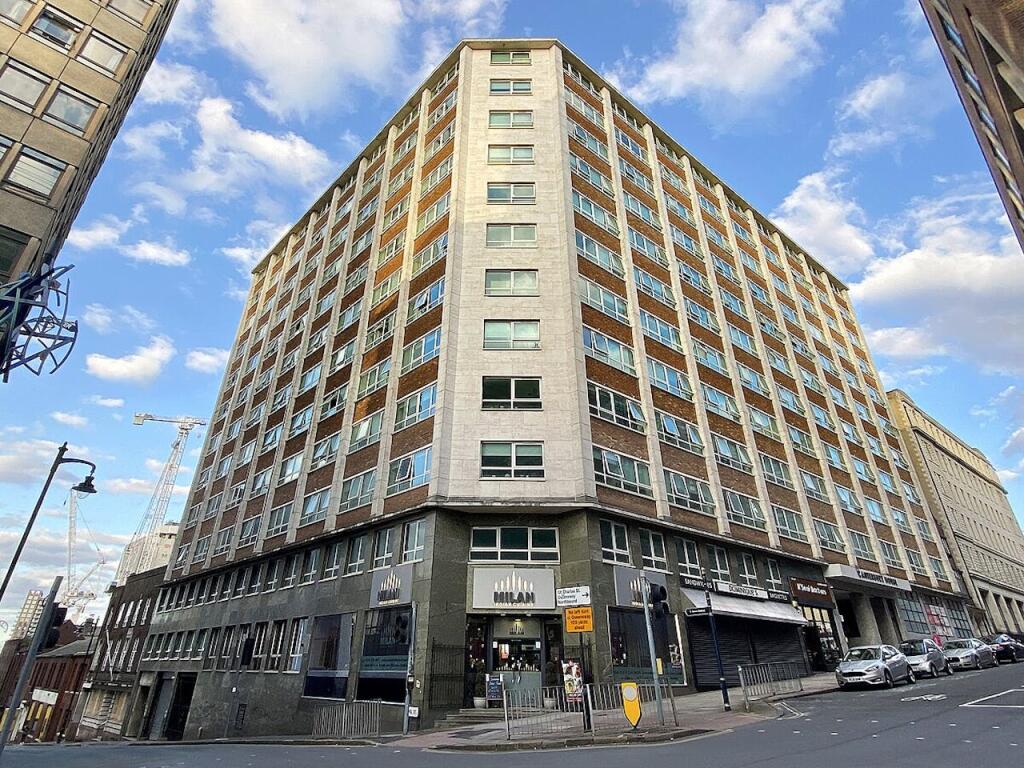
Maritime’s vision and foresight has transformed a retail parade with vacant office space above into a highly successful mixed-use development.
The parade of 10 shops in central Gosport, Hampshire, was purchased directly by Maritime in April 2015 for £2.44m as an off-market acquisition.
Tenants included a variety of local and national retailers and there were 5,000 sq ft of vacant offices above, plus a service yard to the rear.
The site was producing a 10 per cent return, but thanks to our years of experience in development and investment we were able to see further potential in the large service yard and vacant offices in a prime town centre location.
One option envisioned a residential scheme with 20 apartments constructed on stilts over the car park, with another 30 flats occupying the office space, and all of the shops retained underneath.
We also looked at alternative users and started initial conversations with hotel operators.
Due to our long-standing relationship with Travelodge, they bought into the concept of a 70-room hotel.
However after analysing the development appraisal, the figures did not support situating the hotel in the unused office space.
After comprehensive risk-reward analysis, we were able to surrender some of the leases of tenants that had weaker covenants, negotiating on premiums to break their leases in order to demolish the central portion of the parade and let the space to Travelodge.
This allowed us to regain the upper parts and expand the shop units of those tenants with stronger covenants.
Planning permission was granted for a 70-bedroom budget hotel scheme with a new A3 retail unit.
A pre-letting agreement with Travelodge allowed us to access forward funding for a value of £6.6m, which secured us a purchase price and binds the operator in for a 25-year period.
Maritime’s links with Travelodge mean that the hotel building was constructed according to their exact specifications. To ensure timely delivery we engaged approved construction firms who had worked on similar projects.
The development took place without affecting all of the site’s existing income stream, and the hotel has become one of the best-performing in the Travelodge chain.
Maritime Capital also retained the two end properties of the parade as separate assets. At 17 High Street, a development of 12 flats above the retail space is ongoing, while No.8 has received planning permission for 21 units.
This highly-successful outcome demonstrates Maritime’s ability to use priceless connections and problem solving to create value on a project.
Speak to our team
We reworked a Gosport parade into a successful mixed-use asset, bringing in a hotel operator and retaining the best units for further development. Connections and problem-solving turn space into value.
Key insights
Real estate sits alongside equities, private equity and fixed income in most family office portfolios – but it behaves differently to all of them, and that's exactly why it earns its place.
Real estate is one of the core asset classes in most family office portfolios, alongside public equities, private equity, fixed income and increasingly private credit. Family office asset allocation to real estate has grown in recent years, driven by its long-term yield, its role as a diversifier against public markets, and its suitability for multi-generational holding periods that few other asset classes match.
Family offices typically hold a mix of private equity and direct investments, real estate, public equities, fixed income and alternative investments, with the exact split varying by size, generational stage and risk appetite. Real estate tends to justify its place in that mix for reasons other asset classes don't share: a steady, long-term income yield; a long holding horizon that matches how families think about multi-generational wealth; and enough direct control that a family can shape an asset's performance rather than simply hold a position and wait.
Once real estate earns its place in the allocation, there's a separate question of how to access it – directly, or through a fund or REIT structure. That decision affects fees, control and liquidity in more depth than an allocation discussion needs to cover; the trade-offs are set out in full in our guide to financial planning for property investment. What matters at the allocation level is simpler: direct ownership is what lets a family actively shape a property's performance rather than passively hold a position in it, which is a large part of why real estate earns a place in the portfolio in the first place.
Discovery Park in Kent is a clear illustration of what that control can achieve. Brought under active management, the science park's capital value grew from around £20m to more than £75m over two years – restructuring leases and separating out service charges rather than simply holding the asset and waiting. A passive fund position, with no say over how the asset is run, couldn't have delivered the same outcome.
UK real estate remains a core allocation, but the mix within it is shifting. Portfolios are diversifying into student accommodation, retail parks and leisure assets alongside the more traditional office and residential holdings, and branded hotel and hospitality assets remain in favour where they carry a strong covenant. Family offices weighing new allocations are also factoring in wider considerations earlier than before – joint venture and asset management arrangements, transparency requirements such as the Land Registry's Persons of Significant Control and Overseas Entities registers, and planning and tax implications specific to the deal.
Maritime Capital's own track record reflects the same pattern of diversification: self-storage and leisure conversions such as Storage Box in Hersham, branded hospitality including The Forbury Hotel in Reading and Raithwaite Sandsend in Yorkshire, and retail assets alongside the more familiar office and residential holdings. The common thread isn't the sector – it's a covenant and a business model resilient enough to justify the allocation in the first place.
Few asset classes hold up as well across multiple generations as real estate. A well-managed property can be improved, repositioned and passed down without a fixed exit forced by a fund's term, which matters to families thinking in decades rather than years. That said, realising the benefit depends on active management – a passively held property doesn't generate the same value as one where lease strategy, service charge control and repositioning decisions are being made deliberately.
Hungerford Park shows what that looks like over a genuinely long horizon. Acquired in 2005 as a 300-acre estate, it's been built over two decades into a working farm, a holiday-let business and an events venue – the kind of layered, multi-generational value creation that a fund's fixed term could never accommodate, and that only comes from treating the asset as a long-term project rather than a static holding.
Most family offices don't carry deep in-house real estate expertise alongside their wider investment team, which is why property is often the asset class most commonly brought in through a specialist partner rather than managed entirely in-house. Maritime Capital works alongside family offices and their existing advisers – wealth managers, investment managers and private banks – on the UK commercial property portion of the portfolio specifically, from acquisition through to ongoing asset and property management.
Maritime’s vision and foresight has transformed a retail parade with vacant office space above into a highly successful mixed-use development.
The parade of 10 shops in central Gosport, Hampshire, was purchased directly by Maritime in April 2015 for £2.44m as an off-market acquisition.
Tenants included a variety of local and national retailers and there were 5,000 sq ft of vacant offices above, plus a service yard to the rear.
The site was producing a 10 per cent return, but thanks to our years of experience in development and investment we were able to see further potential in the large service yard and vacant offices in a prime town centre location.
One option envisioned a residential scheme with 20 apartments constructed on stilts over the car park, with another 30 flats occupying the office space, and all of the shops retained underneath.
We also looked at alternative users and started initial conversations with hotel operators.
Due to our long-standing relationship with Travelodge, they bought into the concept of a 70-room hotel.
However after analysing the development appraisal, the figures did not support situating the hotel in the unused office space.
After comprehensive risk-reward analysis, we were able to surrender some of the leases of tenants that had weaker covenants, negotiating on premiums to break their leases in order to demolish the central portion of the parade and let the space to Travelodge.
This allowed us to regain the upper parts and expand the shop units of those tenants with stronger covenants.
Planning permission was granted for a 70-bedroom budget hotel scheme with a new A3 retail unit.
A pre-letting agreement with Travelodge allowed us to access forward funding for a value of £6.6m, which secured us a purchase price and binds the operator in for a 25-year period.
Maritime’s links with Travelodge mean that the hotel building was constructed according to their exact specifications. To ensure timely delivery we engaged approved construction firms who had worked on similar projects.
The development took place without affecting all of the site’s existing income stream, and the hotel has become one of the best-performing in the Travelodge chain.
Maritime Capital also retained the two end properties of the parade as separate assets. At 17 High Street, a development of 12 flats above the retail space is ongoing, while No.8 has received planning permission for 21 units.
This highly-successful outcome demonstrates Maritime’s ability to use priceless connections and problem solving to create value on a project.




.jpeg)